This is the FAQ for this section, and mostly is here to get definitions out of the way. This really, in my mind, should be titled "That Page of Information Every Site About Wicca Has."
That title just gets too long though. |
 I don't know how most people's stories go, and I don't know how other people were drawn to Wicca. But what I can do is speak from my own experiences, and tell you something about how I came to call myself a Witch. |
 A brief essay about the importance of Ritual in Wicca, and the importance of improvisation. When most people write about Wiccan ceremonies or worship, I have often seen a focus on the tools required and the language. They read like an instruction sheet, and usually end up with a lot of newly exposed people putting together a grocery list of materials and ritual items they're going to need. I often feel like they miss the point though. |
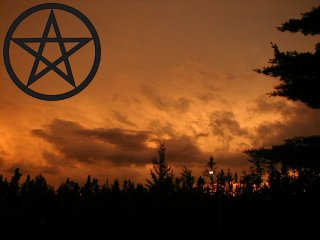 How does one make the choice between practicing Wicca alone and with others? Many of us are drawn to the Craft for different reasons. Personally, I'm a fiercely independent person, and in truth one of the reasons I came to Wicca was the option to practice as a solitary witch. On the other hand, group work can be a very rewarding thing - and I know for a fact that what I miss sometimes is a community around me. |
 One of the biggest challenges to any Wiccan is figuring out how to "Come out of the Broom Closet." Telling your friends and family that you're a "Witch" can be incredibly intimidating. How will they react? What will they think? Will they judge you for it? Is there even a remote chance that someone's going to try and tie you to a stake, surround it with kindling, and light you on fire? In other words, there is a constant fear that they won't accept it. |
 Most Pagans say that the largest enemy to modern Witchcraft and Neo-Paganism is Fundamentalism, and they are right. But while many look at Fundamentalists and Zealots of other faiths like Christianity as this supposed enemy, the truth is the largest enemy is Fundamentalist thinking from within Neo-Paganism and Wicca's own ranks. Wicca is an improvisational religions, and the lack of an "authority" figure draws many to the craft. It's a faith that pulls more from personal experience than dogma, but that doesn't seem to stop certain members of the Wiccan community from attempting to dogmatize it. |
 Recent events have led me to think about the ethics of spell crafting, and what (at least in my opinion) a Witch should and shouldn't do.
In essence, everything a Wiccan does, be it spell craft or going to the grocery store, boils down quite simply to the Wiccan Rede, commonly phrased as "An it harm none, do what ye will." No matter what a Wiccan does, considering whether or not it harms another person must be considered. Now, this does make certain things quite clear, but not everything in life is black and white. |
 I believe that most Neo-Pagan faiths, Wicca very much included, do their best when they evoke that sense of play... that sense of joy. That sense that makes you giggle like an eight year old. Where people go wrong is when they think that to truly believe in something they must treat it as though it is the most serious and humorless subject on Earth. When a person does that, criticism of one's faith changes from being something that one rolls their eyes at to something almost criminal instead. |
 "An it harm none, do as ye will." It's only eight words. But they are eight words steeped in meaning, and they build the moral and ethical core of modern Wicca. But as in any religion, there is debate about it's meaning. What does the Wiccan Rede really mean for a Wiccan? The word "Rede" means "advice" or "counsel." Therein lies our first issue though: How strictly should a Wiccan adhere to a rule which is described merely as advice? To understand the answers to these questions, we must look deeper into the history surrounding the Rede. |
|
|
|
|